


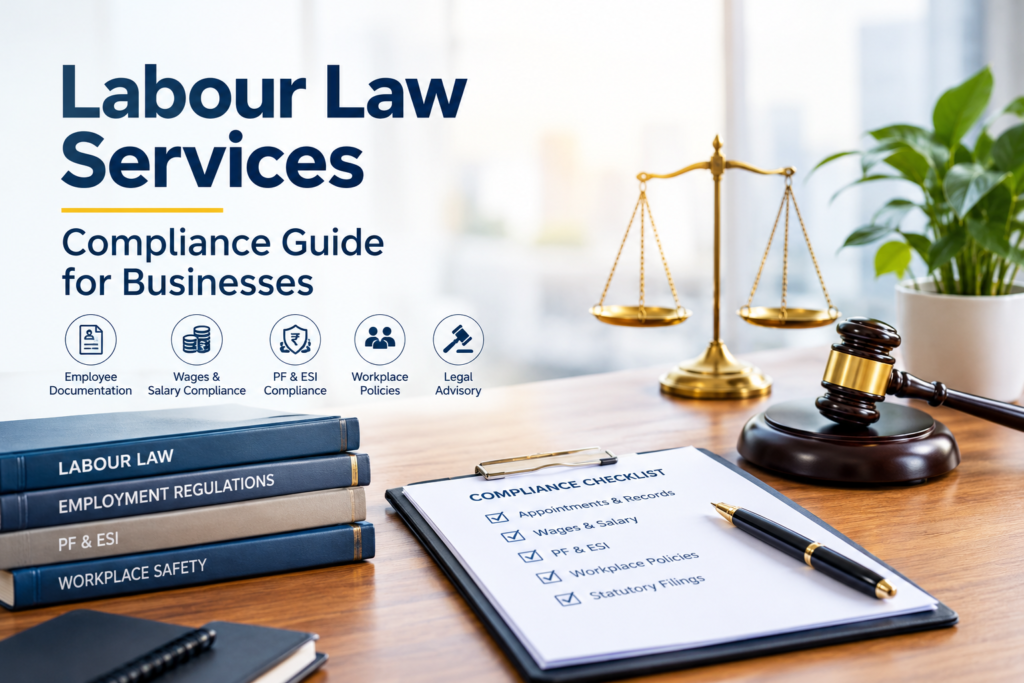
Managing employees is an important part of running a business. Employers need to handle recruitment, salaries, attendance, workplace policies and employee records while ensuring that applicable labour laws are followed. Ignoring these responsibilities can create legal complications and affect the smooth functioning of an organisation.
This is where Labour Law Services become relevant. They help businesses understand employment-related regulations, statutory responsibilities and documentation requirements. Whether you operate a startup, small business or established company, understanding labour laws is important for maintaining organised employment practices.
Quick Answer: What Are Labour Law Services?
Labour Law Services involve professional guidance and support related to employment laws, employee documentation, wage regulations, statutory compliance, PF, ESI and workplace responsibilities. These services help employers understand the legal requirements applicable to their business and maintain appropriate employment records.
Why Are Labour Law Services Important for Businesses?
Every business that employs people has certain responsibilities under applicable labour laws. These responsibilities may differ depending on the number of employees, type of establishment, industry and location.
Understanding labour law requirements helps businesses:
- Maintain proper employee documentation.
- Follow applicable wage and salary regulations.
- Understand PF and ESI responsibilities.
- Maintain attendance and employment records.
- Establish suitable workplace policies.
- Track statutory payments and filing requirements.
- Address employment-related legal concerns.
For startups and growing businesses, having organised employment procedures from the beginning can make workforce management easier.
Important Areas Covered Under Labour Law Services
Labour-related responsibilities cover several aspects of the employer-employee relationship. Businesses should understand the following important areas.

1. Employee Appointment Letters and Documentation
Appointment letters and employment agreements help establish clear terms between employers and employees. They explain job responsibilities, salary details, working arrangements and other employment conditions.
Businesses should maintain documents such as:
- Employee appointment letters.
- Employment agreements.
- Joining and personal information records.
- Attendance and leave records.
- Salary statements and wage slips.
- Employee policies and notices.
Proper documentation helps businesses maintain transparency and manage employment-related matters more effectively.
2. Minimum Wages and Salary Compliance
Employers must understand the minimum wage requirements applicable to their employees and follow relevant payment provisions.
Important areas include:
- Applicable minimum wage rates.
- Salary structures and wage components.
- Timely payment of wages.
- Overtime requirements, where applicable.
- Permitted salary deductions.
- Maintenance of wage records.
Businesses should periodically review their payroll practices to ensure that salary calculations and payment records are accurate.
3. Provident Fund (PF) Compliance
Employees’ Provident Fund is an important part of India’s social security framework. Eligible establishments must understand their registration, contribution and record-keeping responsibilities under applicable provisions.
PF-related responsibilities may include:
- Checking the applicability of PF provisions.
- Understanding employee enrolment requirements.
- Maintaining employee information.
- Reviewing employer and employee contributions.
- Following applicable payment and filing procedures.
Maintaining accurate payroll and employee records helps businesses manage these responsibilities.
4. Employee State Insurance (ESI) Compliance
Employee State Insurance provides eligible employees with healthcare and social security-related benefits under the applicable framework.
Depending on the establishment and employee eligibility, businesses may need to manage:
- ESI applicability and registration.
- Employee eligibility and enrolment.
- Applicable contribution responsibilities.
- Wage and attendance records.
- Required payment and filing procedures.
PF and ESI requirements should be reviewed as part of the organisation’s regular payroll and statutory compliance process.
5. Employee Records and Statutory Registers
Maintaining updated employee records is essential for organised workforce management. Depending on applicable requirements, businesses may need to maintain information relating to wages, attendance, working hours, leave and employment conditions.
Important records may include:
- Employee details and joining dates.
- Attendance and working-hour information.
- Salary and wage records.
- Leave information.
- Employment-related correspondence.
- Applicable statutory registers and returns.
Businesses should ensure that these records are accurate, updated and stored securely.
6. Workplace Safety and Employee Policies
Employers also have responsibilities relating to workplace safety, employee welfare and working conditions under applicable laws.
Businesses should establish suitable policies covering:
- Employee conduct and workplace behaviour.
- Attendance and leave procedures.
- Workplace safety practices.
- Employee grievance reporting.
- Relevant health and welfare requirements.
The specific requirements may differ according to the workplace, industry and nature of business activities.
7. Contract Labour and Contractor Responsibilities
Some organisations hire workers through contractors or manpower agencies. These arrangements may involve additional legal and documentation responsibilities.
Employers should review contractor agreements, worker details, wage records and applicable statutory requirements. They should also understand their responsibilities as principal employers wherever relevant provisions apply.
Labour Law Compliance Services: What Should Businesses Understand?
Labour Law Compliance Services focus on helping businesses understand and manage their applicable employment-related obligations.
Some important compliance areas include:
- Maintaining required employment documents.
- Reviewing applicable wage provisions.
- Understanding PF and ESI obligations.
- Maintaining statutory registers.
- Tracking relevant payment and filing deadlines.
- Reviewing contractor-related documentation.
- Monitoring changes in applicable labour regulations.
India’s labour framework includes four Labour Codes:
- Code on Wages, 2019.
- Code on Social Security, 2020.
- Industrial Relations Code, 2020.
- Occupational Safety, Health and Working Conditions Code, 2020.
These Codes consolidate 29 central labour laws. Employers should also review applicable rules, notifications and state-level requirements because labour is a subject in the Concurrent List.
Common Labour Law Challenges Faced by Businesses
Businesses may face different challenges while managing employment-related responsibilities. Some common issues include:
- Incomplete employee documentation.
- Errors in salary and attendance records.
- Lack of awareness about applicable wage requirements.
- Delays in statutory contributions.
- Unclear employment policies.
- Difficulty tracking compliance deadlines.
- Limited understanding of changing labour regulations.
Small businesses and startups may find these responsibilities particularly challenging because they often have limited HR and administrative resources.
How Can Labour Law Consultancy Services Help Businesses?
Labour Law Consultancy Services can help employers understand employment regulations and identify the requirements applicable to their establishments.
Professional guidance may assist businesses with:
- Understanding employer responsibilities.
- Reviewing employment documentation.
- Identifying relevant compliance requirements.
- Understanding wage, PF and ESI obligations.
- Reviewing workplace policies.
- Managing employment-related documentation.
- Understanding applicable legal updates.
For businesses operating in Bihar, professional guidance can also help them understand the relevant state-level requirements.
Labour Law Advisory Services: When Should a Business Seek Guidance?
Businesses may need professional guidance when starting operations, hiring employees, expanding their workforce or reviewing existing employment practices.
For example, an organisation may need assistance when it is unsure about employee documentation, statutory contributions, contractor arrangements or applicable workplace regulations.
Businesses looking for location-specific professional support can explore Labour Law Advisory Services in Patna to understand employment-related legal requirements and compliance responsibilities.
Seeking guidance at the right time can help employers review their existing practices and address areas that require attention.
Practical Tips to Maintain Labour Law Compliance
Businesses can follow these practical steps to manage employment responsibilities more effectively.
Maintain Updated Employee Records
Keep employee details, appointment letters, salary information and attendance records updated.
Review Payroll Regularly
Check salary calculations, applicable deductions and statutory contributions as part of the regular payroll process.
Prepare a Compliance Calendar
Track applicable payment dates, filing requirements and other statutory deadlines.
Review Employment Policies
Ensure that workplace policies reflect the organisation’s working arrangements and applicable legal requirements.
Monitor Labour Law Updates
Follow official government notifications and review internal procedures when applicable regulations change.
Frequently Asked Questions
1. What are Labour Law Services?
Labour Law Services provide professional guidance on employment regulations, employee documentation, wage requirements, statutory compliance and employer responsibilities.
2. Who needs Labour Law Services?
Startups, small businesses, MSMEs, factories and established companies may need labour-related guidance depending on their workforce, industry and applicable legal requirements.
3. What do Labour Law Consultancy Services include?
They may include guidance on employment documentation, wage regulations, PF, ESI, statutory registers, workplace policies and applicable labour laws.
4. Why are Labour Law Compliance Services important?
They help businesses understand applicable statutory obligations, maintain employment records and review their compliance practices.
5. Where can businesses find Labour Law Services in Patna?
Businesses in Patna can approach professional legal and compliance firms for guidance on employment regulations, documentation and labour-related responsibilities.
Conclusion
Labour law responsibilities are an important part of managing any organisation that employs people. From appointment letters and wage payments to PF, ESI and workplace policies, businesses need to understand the requirements applicable to their operations.
Maintaining proper records, reviewing payroll practices and monitoring legal updates can help employers manage their responsibilities more effectively. A planned approach to employment compliance also supports transparent workplace practices and better workforce management.legal obligations more effectively.