


Introduction
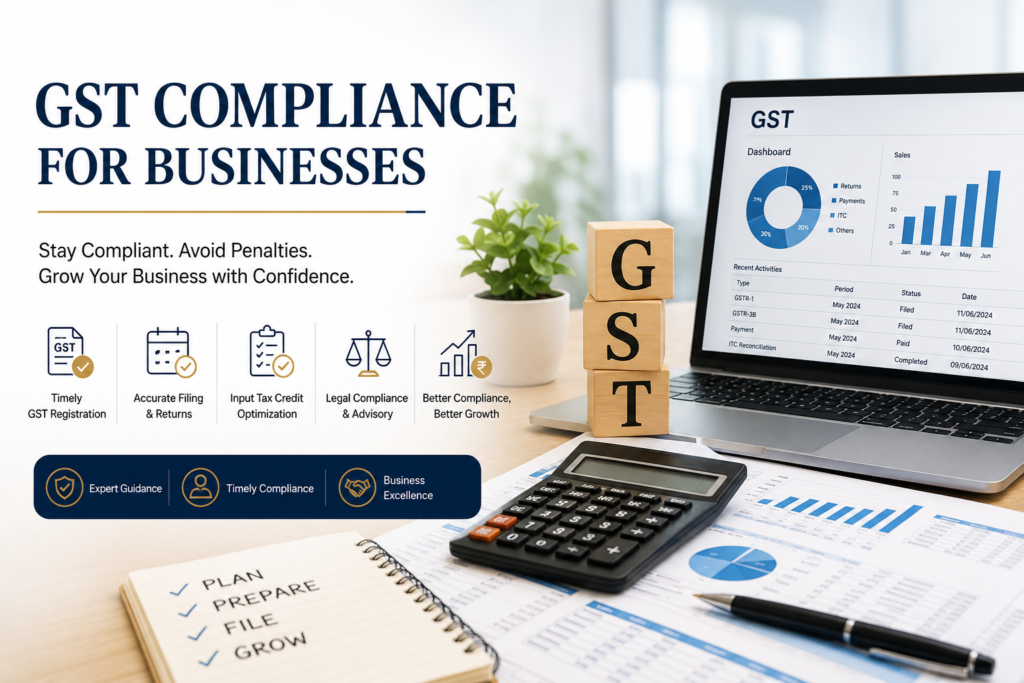
GST compliance has become one of the most important operational responsibilities for businesses in India. Whether it is a small business, startup, trader, service provider, or large company, maintaining proper GST compliance is essential to avoid penalties, legal notices, financial losses, and unnecessary departmental scrutiny.
Many businesses face compliance issues not because of intentional mistakes, but due to poor record management, delayed filing, incorrect invoicing, or lack of professional guidance. Even small errors in GST returns or documentation can create serious complications during assessments or audits.
A well-managed GST system helps businesses maintain transparency, claim input tax credit properly, improve financial management, and reduce legal risks.
1. Incorrect GST Return Filing
One of the most common GST mistakes businesses make is filing incorrect returns. Errors in sales figures, purchase entries, tax calculations, or invoice details can result in notices from the GST department.
Many businesses fail to reconcile invoices properly before filing returns. Differences between GSTR-1, GSTR-3B, and purchase records may lead to compliance issues and tax mismatches.
To avoid these problems, businesses should:
-
Verify all invoices before filing returns
-
Maintain updated accounting records
-
Reconcile purchase and sales data regularly
-
Review GST calculations carefully
-
Seek professional assistance when required
Accurate filing reduces compliance risks and helps maintain proper tax records.
2. Missing GST Filing Deadlines
Late GST return filing is another major issue faced by businesses. Delayed filing may result in:
-
Penalty charges
-
Interest liabilities
-
Suspension of compliance activities
-
Loss of input tax credit opportunities
-
Increased scrutiny from authorities
Businesses should maintain a proper compliance schedule and ensure all returns are filed within the prescribed due dates.
Using professional compliance support or maintaining a dedicated accounting process can significantly reduce the risk of delays.
3. Improper Invoice Management
GST invoices play a critical role in taxation and compliance management. Incorrect or incomplete invoices often create complications during audits, assessments, and return reconciliation.
Common invoice mistakes include:
-
Incorrect GST number
-
Missing invoice details
-
Wrong tax calculations
-
Incorrect billing information
-
Missing HSN or SAC codes
Proper invoice management ensures smooth compliance and protects businesses from unnecessary disputes.
4. Ignoring GST Notices
Many businesses underestimate the importance of responding to GST notices properly and within the required timeline.
Ignoring notices can increase legal complications and may result in penalties or further departmental action.
Professional assistance is important for:
-
Understanding notice requirements
-
Preparing proper responses
-
Managing legal representation
-
Maintaining compliance records
-
Handling departmental communication professionally
Timely response and proper documentation are essential in resolving GST disputes effectively.
5. Lack Of Proper Documentation
Documentation is one of the most important parts of GST compliance. Businesses should maintain organized records of:
-
GST returns
-
Tax invoices
-
Purchase records
-
Financial statements
-
E-way bills
-
Compliance documents
Poor documentation creates difficulties during audits and legal proceedings.
Maintaining systematic records improves operational efficiency and reduces legal risks.
6. Failure To Claim Input Tax Credit Properly
Input Tax Credit (ITC) is a significant benefit under GST, but many businesses fail to claim it correctly due to mismatched invoices or improper documentation.
Businesses should regularly reconcile vendor invoices and ensure compliance before claiming ITC.
Improper ITC claims may lead to penalties and financial losses.
Importance Of Professional GST Support
GST compliance involves regular monitoring, legal understanding, accurate documentation, and timely filing. Professional assistance helps businesses:
-
Reduce compliance risks
-
Avoid penalties
-
Maintain accurate records
-
Handle notices effectively
-
Improve financial transparency
-
Focus on business growth
Professional guidance becomes even more important when businesses deal with litigation, departmental notices, or complex tax matters.
Conclusion
GST compliance is not just a legal formality but an essential part of responsible business management. Businesses that maintain accurate records, follow proper compliance procedures, and seek timely professional support can avoid unnecessary legal and financial complications.
Jugnu Deb & Co. provides professional GST compliance, advisory, litigation, and taxation support services for businesses and individuals.